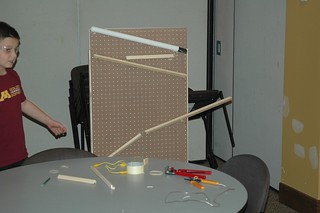
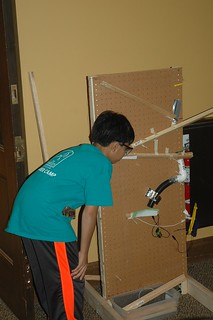
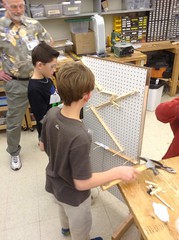
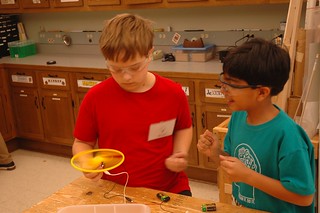
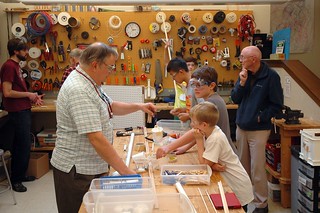
The more I read about mechanical computers the more fascinated I become. I wanted to share some of the stories and resources I shared with the Inventors Club students from the Fall session.
To understand what a mechanical computer is we have to think about what a computer is. I think of a computer as a machine that deals with information. You give a computer some input, the computer works with that information and gives you some information back. If we think about computers in this broad sense we can argue that computers have been around for 1000's of years.
One of the oldest examples is the
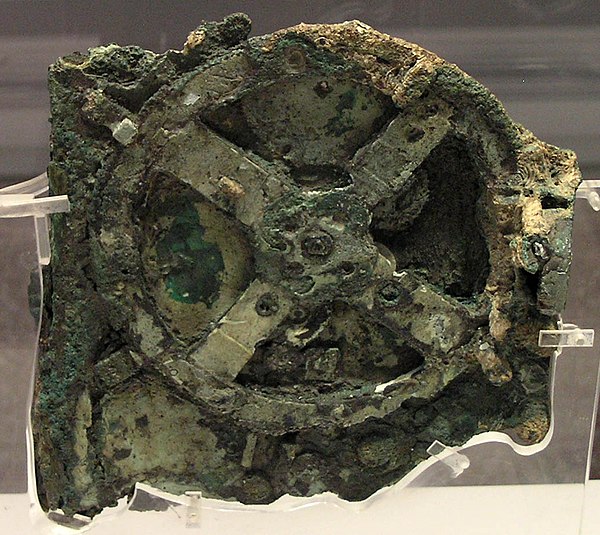
Antikythera. This machine was a complicated system of gears that would model the motion of the planets and moon. It even predicted eclipses. It is speculated to be the work of Archimedes. It is an amazing feat of engineering. There is a great
NOVA episode exploring this early computer and the story of how a group of scientist reversed engineered this complicated device. It is fascinating!
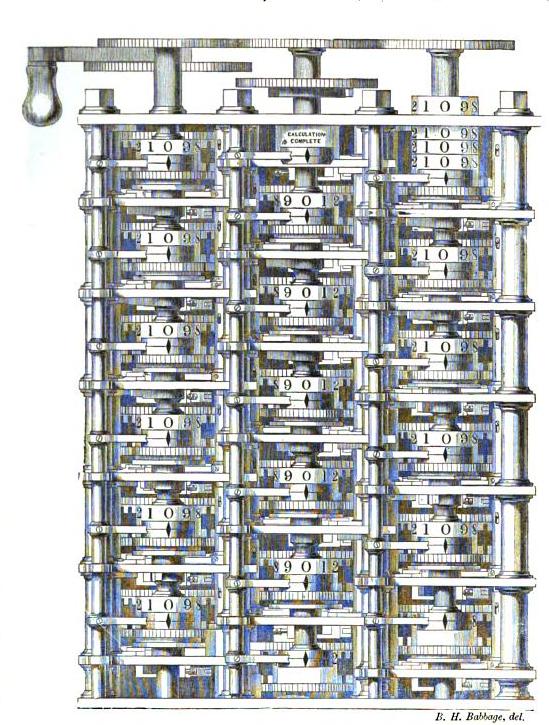
Charles Babbage often gets credit for designing the first modern day digital analogue computer. Babbage started first on a difference engine in 1822. This machine would calculate polynomial functions by subtraction. Before he completed his device he began to imagine a more sophisticated machine that could perform many more operations. This machine came to be known as the Analytical Engine.
Here are some fun examples of more recently constructed mechanical computing machines.
Binary Adder - This machine is not particularly old, but I still think it is pretty interesting.
Another fun mechanical computer is Evil Mad Scientist's
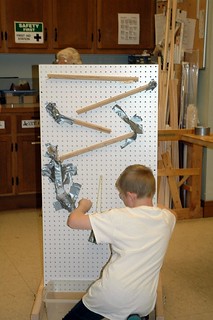
giant DigiComp II. This machines uses marbles, or eight balls in Evil Mad Scientist's case, to do addition, subtraction, or many other computations.
Our final example of a mechanical computer is a ball clock. In this machine each marble represents a unit of time. Once a minute a new ball would be added to the top of the ramp. Can you tell what time it is according to this clock?
Were you thinking 8:38? Give your self a back on the back.